

In the world of Lean leadership, we spend a lot of time talking about “customer value,” “flow,” and “reducing waste.” But one of the most common sources of waste isn’t a clunky process, it’s a poorly handled negotiation. Whether you are securing a new contract, aligning departments on a project timeline, or making a key hire, effective negotiation is a process. Learn the Lean “art of the deal” with these pointers adapted from material in our leadership training program.
Collaborate for Win-Win
Most people view negotiation as a “zero-sum game.” If you get a bigger slice of the pie, my slice must be smaller. In Lean terms, this is a “Competitive” mindset, and it’s remarkably inefficient, leading to guarded information and broken trust.
Stephen Covey’s Habit 4 from The 7 Habits of Highly Effective People is to “Think Win-Win.” Covey encourages us to see agreements as mutually beneficial. This aligns perfectly with the shift from competitive to collaborative negotiation.
Here is how Covey lays out the approaches to negotiation. The objective should be for both sides to achieve their goals and gain strength.
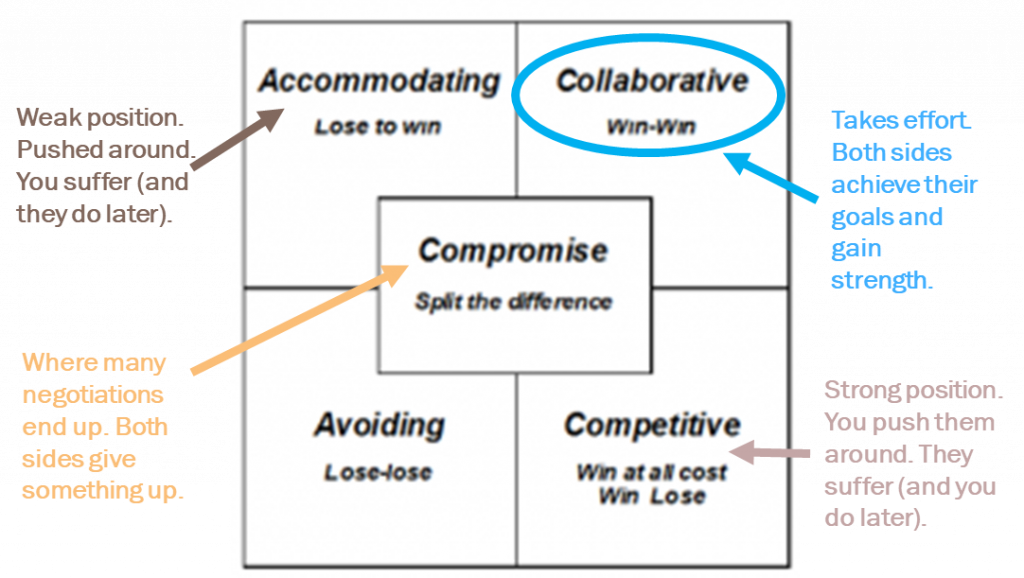
When you approach a negotiation with a Win-Win mindset, you aren’t being “soft,” you are being strategic. Win-win agreements ensure both parties stay committed to the deal long after the contract is signed.
Seek First to Understand, Then to Be Understood
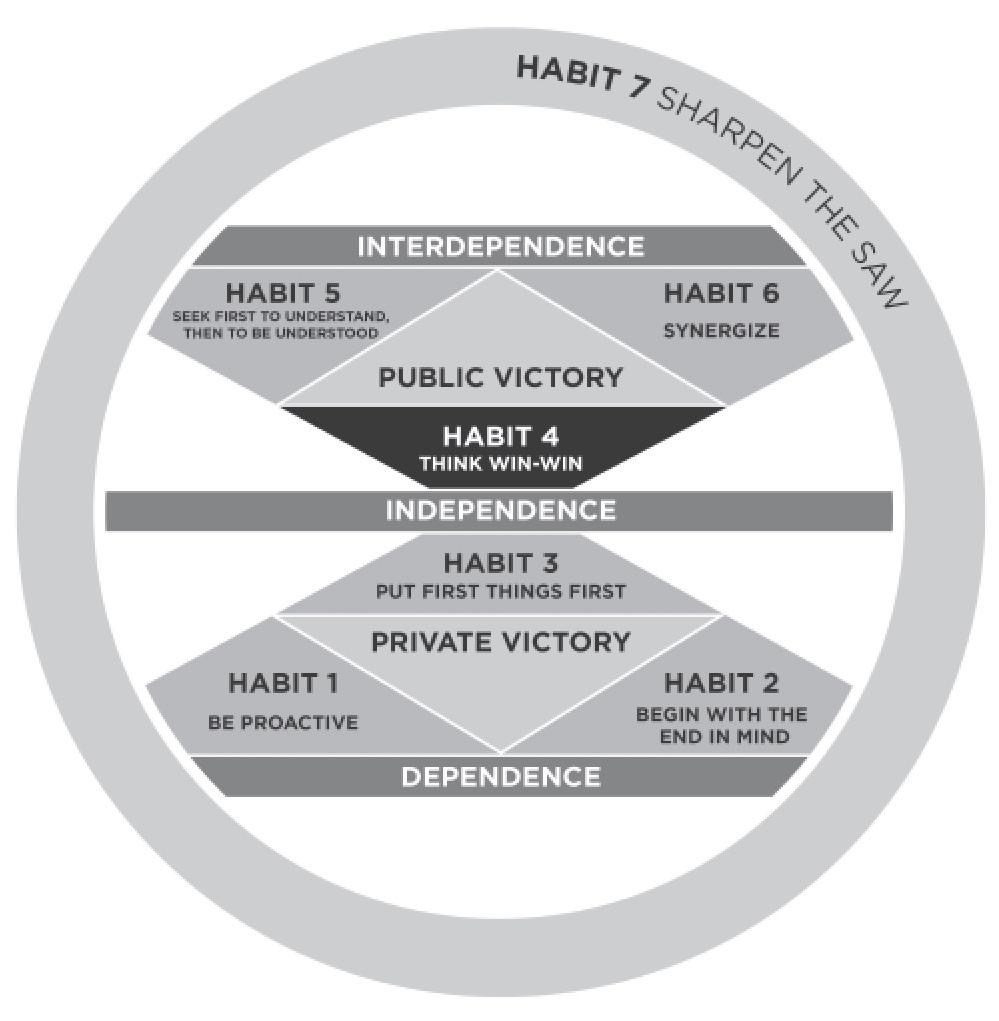
The best way to reach a win-win agreement is by using Covey’s Habit 5: Seek First to Understand, Then to Be Understood. Try to understand the other side’s goal in the agreement; not the position they are taking but the deeper purpose(s) they have for the agreement. Using empathic listening to genuinely understand the other party compels them to take the same approach with you and creates a collegial problem-solving atmosphere.
This is perhaps Covey’s most powerful habit for negotiators and works alongside collaborating for win-win. Most people listen with the intent to reply, not to understand. They are busy sharpening their next argument while the other person is still talking.
Effective negotiators do the opposite. They use active listening to gather data. By seeking first to understand the other party’s constraints, pressures, and goals, you uncover the roadmap to an agreement.
Focus on Interests, Not Positions

This is where Habit 5 meets tactical negotiation.
- A position is a surface-level demand. “I want a 10% discount.”
- An interest is the underlying why for the demand. “I need to hit my quarterly budget targets to avoid a hiring freeze.”
If you argue against a position, you get a deadlock. If you solve for an interest, you get a deal.
Master the Prep Work
In Lean, we never want to start a process improvement without a clear plan and a clear understanding of the background. Negotiation is no different. The side that has done the most homework usually has the most leverage.
Here are a few planning steps to take prior to beginning a negotiation:
- Is there any contract history? Research any previous contracts available to learn from.
- Write down the PROs and CONs of an agreement from your point of view. What are your key interests?
- Now consider the PROs and CONs of the agreement from the other view based upon your current knowledge. What key questions arise? You may be able to use this knowledge during the negotiation as you seek first to understand.
- Before entering the room, define your “Walk-Away Point.” You need to know exactly when this deal isn’t worth it anymore. The WRAP process can help you with this decision.
- The most important part of your preparation is defining your BATNA (Best Alternative to a Negotiated Agreement). This is your “Plan B.” If this specific deal falls through, what is your next best option? When you have a solid alternative, you gain the power to say no.
Lead the Conversation
We covered the preparation and the mindset, but what about the conversation reviewing the proposal?

- Tactically label to surface information. Instead of asking direct questions that can feel like an interrogation, use “labels” to surface information. Labels start with phrases like “It seems like…” or “It sounds like…”
- Use “How” and “What” questions and avoid “Why” questions that trigger defensiveness. If there is a demand that’s impossible for you to meet, ask: “How am I supposed to do that?” This isn’t a “no.” It’s an invitation for them to look at your constraints and often leads to a concession or a different path you hadn’t considered.
- When it’s time to talk numbers, instead of a single “anchor” figure, use a range that includes your target number. If the most you will pay is $25,000, suggest a range of $22,000 to $25,000.
- Giving away a concession for nothing in return is a negotiation waste. Don’t say “Yes” to a request without a “But” or an “If.” For example, if they ask for faster delivery, don’t just say “We’ll try.” Use the If-Then structure: “If you can commit to a 12-month contract, then I can authorize the faster delivery at no extra cost.”
- Use the power of silence to your advantage. After you make a proposal, or after the other party makes a demand, stop talking. If you let the silence sit for three to five seconds longer than feels comfortable, the other party will often fill that silence by providing more information, offering a concession, or revealing an underlying “interest” they hadn’t mentioned before.
Summary: The Lean Art of the Deal
Effective negotiation should be a Lean process. It is the search for a “Win-Win” outcome by eliminating the waste of misunderstanding and maximizing the value for both parties.
- Prep in advance: Be ready with questions and don’t walk in without a Plan B.
- Listen to Learn: Try to understand their world before you ask them to join yours.
- Lead the conversation: Use tactical labeling, the right kinds of questions, and pauses to learn more.
- Focus on interests: Look past what they say they want to find what they actually need.
- Seek win-win: Aim for a partnership, not a conquest.
By applying these principles, you’ll find that negotiations stop being a source of stress and start becoming a tool for organizational growth.
Please leave any questions and comments below.
Related Posts
The Batching Trap: 3 Ways It Feels Efficient but Isn’t
5 Better Questions to Build a Lean Coaching Habit
Lean AI: How to Integrate Artificial Intelligence Without the Waste